By Renato, who builds Kept ·
No, writing down what your friends tell you is not weird, as long as what you write is about them and not about the balance between you.
The research on close relationships draws the line in a useful place: keeping track of what someone needs is how communal relationships work, while keeping track of who gave what is characteristic of exchange relationships, and in close ones it reduces attraction. A note that says her mum’s surgery is in March is the first kind. A note that says you have messaged three times in a row is the second. The uneasy feeling usually comes from mixing them up.
The short version
- Tracking what someone needs is communal. Tracking who owes whom is exchange, and where closeness was wanted, prompt repayment of a favour reduced attraction.
- Feeling understood, validated and cared for is the working definition of intimacy, and a remembered detail is one of the few hard-to-fake ways to produce it.
- Adults with amnesia made very few new close friends, which points at carrying detail from one conversation to the next as a working part of closeness.
- Measuring an enjoyable activity made people do more of it and enjoy it less, so keep counts out of your notes.
- Write what you noticed, not a recording. When people learned their voice devices were always listening, their privacy concern rose by roughly half.
Why it can feel weird
The unease is worth taking seriously, because it is pointing at something real. Notes about people are the standard tool of relationships run on obligation: the client file, the business card with a scribble on the back, the favour to be returned. Writing down a friend’s news can feel like bringing that into a friendship.
A long research programme by Clark and Mills gives the feeling a name. It distinguishes exchange relationships, where benefits are given to incur or repay an obligation, from communal relationships, where they follow from concern for the other person’s welfare. Keeping track of individual inputs is characteristic of the first. And where closeness is wanted, prompt repayment of a benefit reduces attraction rather than increasing it: the bookkeeping itself signals the wrong kind of relationship.
So the instinct is right about ledgers. Where it goes wrong is in assuming every note is one. The same research gives the line: tracking what someone needs, and what they told you, is communal; tracking who owes whom a message is exchange. "Her mum is having surgery in March" is a need. "I have messaged her three times and she has messaged once" is a balance. Most of this work is laboratory studies of short-lived interactions, the two norms mix in real life, and it describes what tracking signals rather than what a private note nobody else sees does. It still tells you which kind of note to keep.
Remembering is not a trick
The case for writing things down is not that it makes you look attentive. In the relationship literature, intimacy is operationally defined as feeling understood, validated and cared for, and perceived partner responsiveness predicts the behaviours that keep relationships going: gratitude, forgiveness, support, constructive handling of conflict. Referencing something specific a person told you is one of the few reliable ways to produce that perception, because it cannot be done without having listened.
That is a framework resting mostly on correlational work, and responsiveness and relationship quality feed each other, so no direction is established. The word doing the work is perceived. What moves a relationship is what the other person registers, and a detail you meant to ask about and then forgot registers as nothing.
The starkest evidence that carrying detail matters comes from an unusual group. Adults with adult-onset amnesia had made very few new close friends since onset, and being unable to discuss recent shared events or return to previous conversations appears to block the bonding process. It is a small clinical sample, and amnesia changes far more than memory, from work to independence, so it shows an association in an unusual population rather than a proven mechanism. It still points at which link in the chain is doing the work. If your memory for what people tell you is ordinary, a note is a way of not depending on it.
What belongs in the note, and what doesn’t
Write needs, dates and threads. The interview on Thursday. The dog’s operation. The book she said she would lend you. The test is whether it turns into a question next time: "how did Thursday go?" is a reason to get in touch, and "we talked about work" is not.
Leave out the arithmetic. In six experiments, measuring how much of an ordinarily enjoyable activity people did increased the amount and decreased the enjoyment, and the drop persisted after the measuring stopped. Those experiments were about walking and reading, not friendship, and carrying them over is an extrapolation. But a column of days since you last spoke, or a tally of who reached out first, is measurement of exactly that kind, and it is also the exchange ledger from the first section.
The note is there so you come back with something, not so you hold a file on someone. A detail that is only ever read, and never turns into a question or a message, is doing nothing for the friendship.
Notes, not recordings
If writing things down is fine, recording the conversation can look like the efficient version. It is not, for two reasons the evidence makes plain.
The first is how being listened to feels. Survey and interview research with voice-assistant owners found that around a fifth did not know their devices were always on and listening, and that privacy concern rose by roughly half once they learned it. Owners also distrusted mute buttons and indicator lights. That work is about smart speakers in the home, not friends, and it measures stated concern rather than behaviour. It does show how people react to finding out they were being captured, and there is no reason to expect a friend to take it better.
The second is that wholesale capture does not help. A review of a decade of lifelogging research found that recording everything produced enormous archives and no compelling uses. The failure was not technical: the systems captured fine, and nobody went back to what they captured. It is a critique rather than an experiment, and it predates modern transcription, but the argument about usefulness has not changed. A one-line note about what you noticed is the thing you will actually reread.
What to actually do
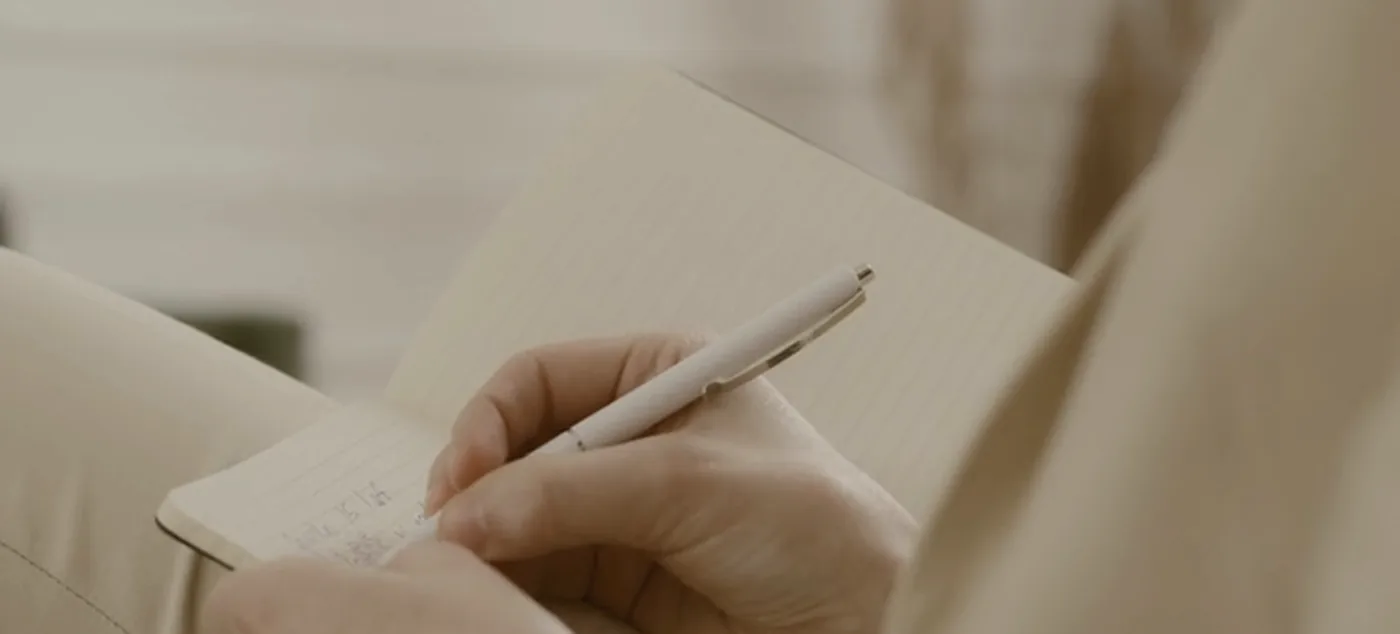
Keep one short note per person, written within a few minutes of hearing something, with dated one-line entries: what they are waiting on, what is coming up, what they mentioned being worried about. Write it in your own words, about them.
Keep counts out of it. No last-contacted dates, no tally of who messaged first. If you notice a note turning into a record of who owes whom, delete that line, because it is the part that makes the whole thing feel wrong.
None of this needs an app. A notes file, or a line in the calendar entry on the day you are seeing someone, is enough. The point of the note is the question it turns into: read it before you meet, ask about the thing, and the record has done its job.
Questions people ask
- Is it creepy to remember small details about people?
- Not according to the research on close relationships. Feeling understood, validated and cared for is the working definition of intimacy there, and referring to something specific a person told you is one of the few reliable ways to produce it, because it cannot be done without having listened.
- Should I record conversations with friends so I don’t forget?
- Better not. In survey research on voice assistants, privacy concern rose by roughly half once people learned their devices were always listening, and a review of lifelogging found that recording everything produced huge archives nobody used. A one-line note about what you noticed does the job.
- What should I write down about a friend?
- Needs, dates and threads: the interview on Thursday, the operation next month, the book they offered to lend you. Leave out counts and who messaged last, which is the bookkeeping of exchange relationships rather than close ones.
Where this comes from
Every claim above traces to one of these. Each has its own page with the method and what it doesn’t show.
Keeping score is how exchange relationships work, and it damages close ones
Clark & Mills · Communal and exchange relationships
Feeling understood is the working definition of intimacy
Reis, Clark & Holmes (2004) · Perceived partner responsiveness
People with amnesia make almost no new close friends
Davidson et al. (2012) · Frontiers in Psychology
Measuring an activity makes people enjoy it less
Etkin (2016) · Journal of Consumer Research
People don’t realise their voice devices are always on, and mind a lot once they do
Malkin et al., and the voice-assistant privacy literature · Privacy controls for always-listening devices
Recording everything produced huge archives and nothing useful
Sellen & Whittaker (2010) · Communications of the ACM
Read next
How to remember the details your friends tell you
Write it down within minutes, keep it short and specific, and make sure something brings it back before the next conversation.
Why we’ll never put a streak on your friendships
Measuring an enjoyable activity makes people do more of it and enjoy it less — and do less of it once the tracking stops.
How to be a better friend, according to the research
Across 38 studies, four things a friend does went with wellbeing: react well to good news, back their choices, keep the effort up, make them feel they matter.
Kept is what we built from this.
Nine seconds of talking after you see someone. Kept files it against the right person and hands it back the day before it matters. No streak or score on anyone in it, and it never writes your messages.
Or see how it compares to the alternatives, including where they beat it.