KeptKept

Private voice journal · Android

Remember what they told you.Weeks after they told you.

Nine seconds of talking after you see someone. Kept files it against the right person and hands it back the day before it matters — her interview, his move, the surgery in March.

Get it on Google Play

Free for 14 days, no card needed.

Half a personal network turns over every seven years, and almost none of it to a falling-out. See the research →
In · 9 secondsHold the mic, say what happened. Kept works out who it was about.
Out · 3 weeks laterThe detail comes back on its own, with the thing you actually noticed still in it.
A figure alone on a station platform as a train pulls away.
indianrailwayvibes / Pexels

Friendships don’t end.They lapse.

Almost nobody loses a friend to a falling-out. The shared context evaporates, nobody initiates, and one day it has been two years.

Seven years on, 48 of every 100 people in someone’s network were still in it. The network didn’t shrink — the names changed.

You’re not cold. You’re just wrong about them.

To: Sam

Hey! We should catch up sometime soon!

Draft · 14 months

The thing stopping the message isn’t indifference. It’s a prediction — and three separate research groups have measured it leaning the same way every time. People are more pleased to hear from you than you expect.

Hands holding a phone in a parked car at night.
Tima Miroshnichenko / Pexels

The loop, end to end

Just talk

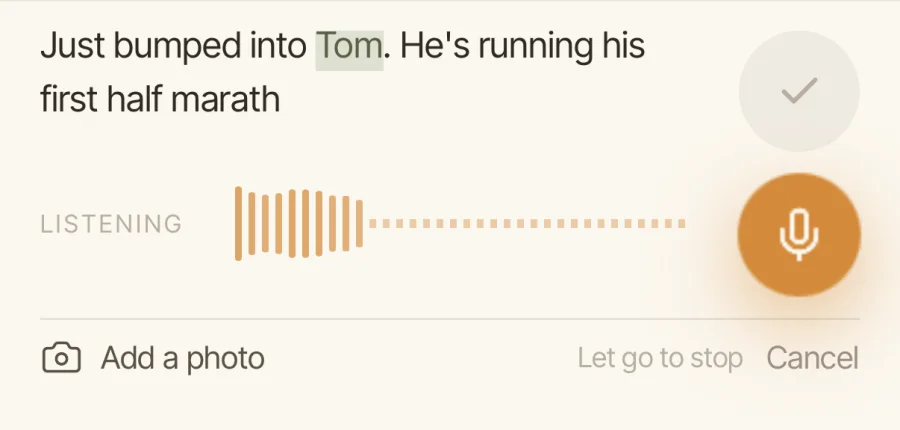
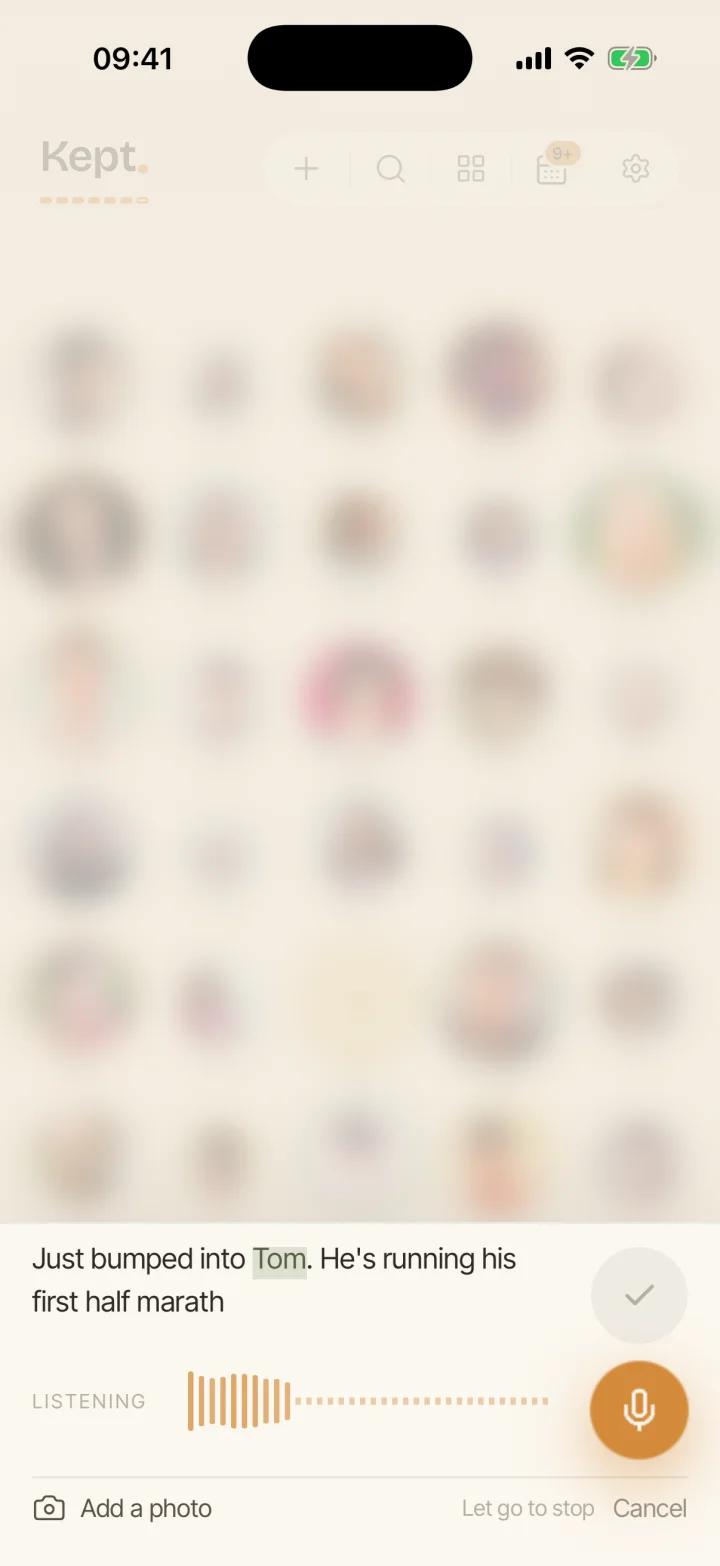
One tap from home. Hold the mic, say what happened. Kept routes it to the right people when you stop.

The mic is held, never open. There is no other mode.

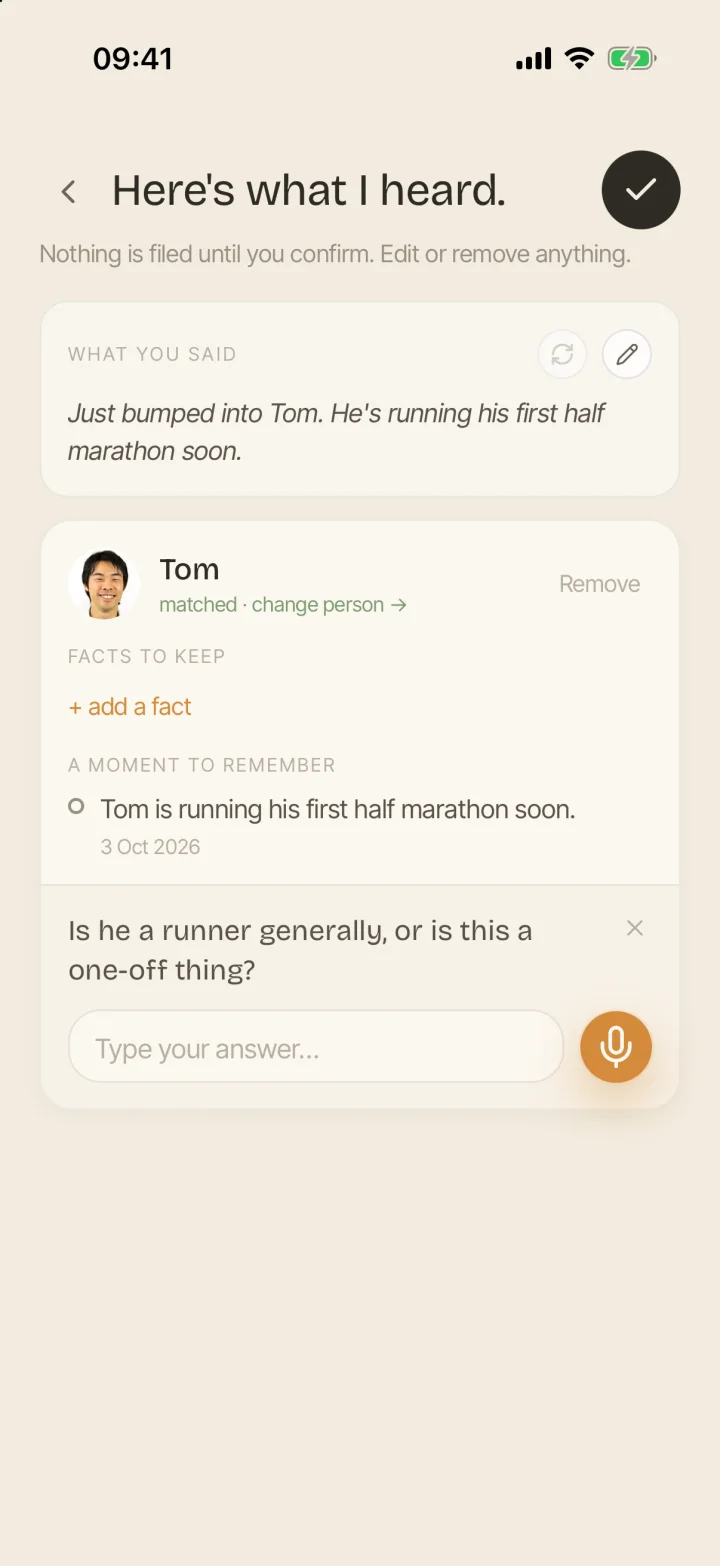
You confirm first

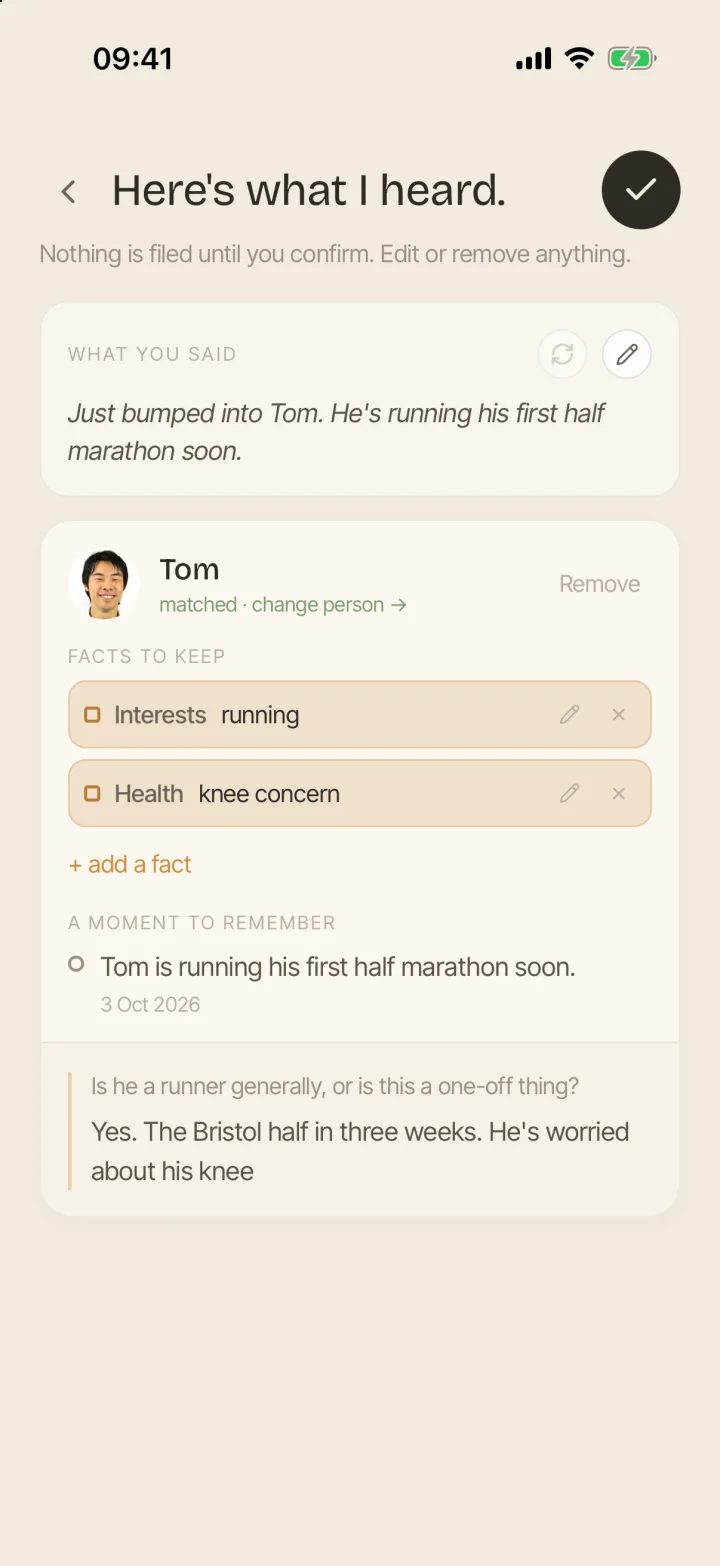
Every note passes through extraction review. Nothing saves without your OK.

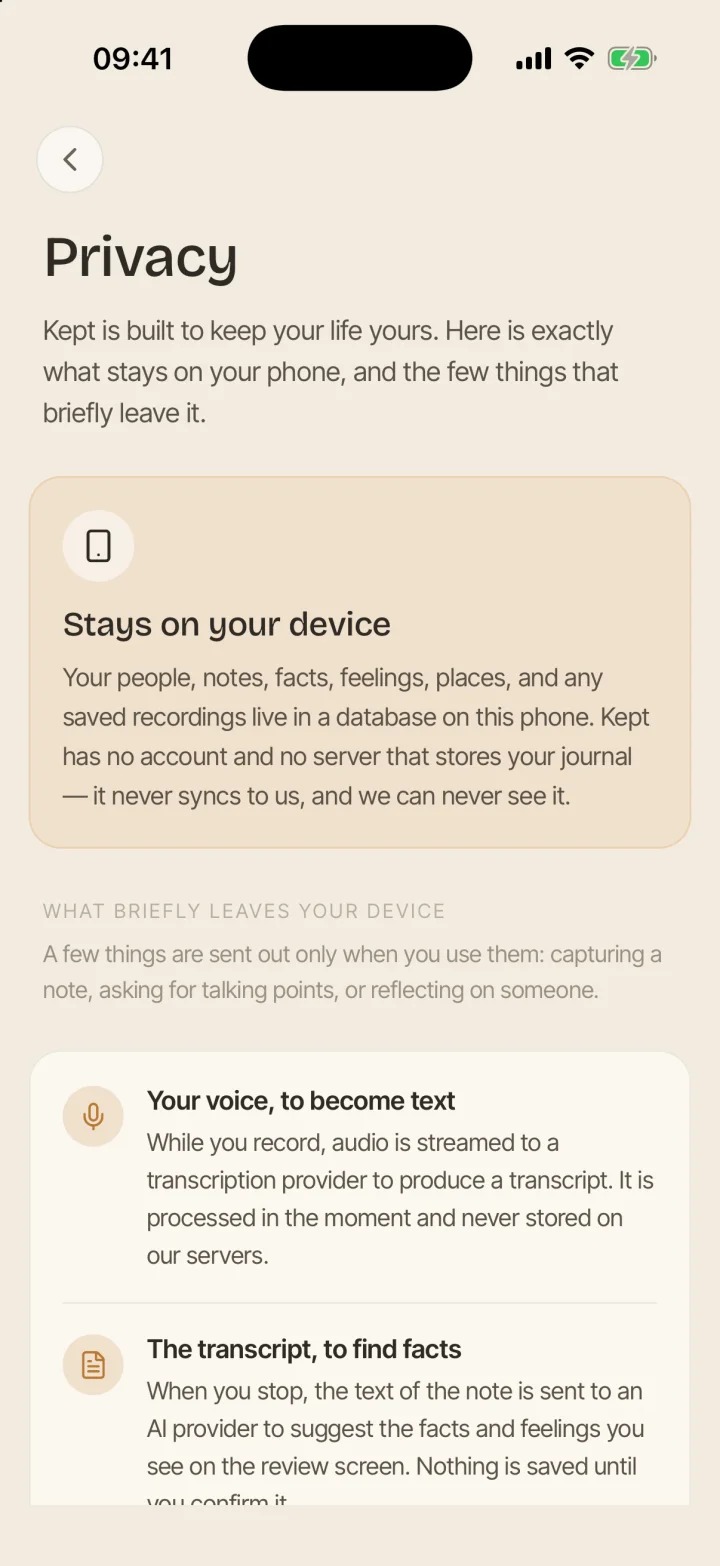
It stores what you noticed, never a recording of them.

The review screen: a transcript at the top, then the two people it matched, each with the facts and the moment Kept wants to keep, and a File it all button.

It fills in behind you.

The same screen at one, six and fourteen days. You are never asked to set it up, pick your close friends, or import a contact list — the people arrive because you mentioned them.

Day 1, 2 people

The home screen on day one: two faces and the microphone.

What’s in it

Journaling by person

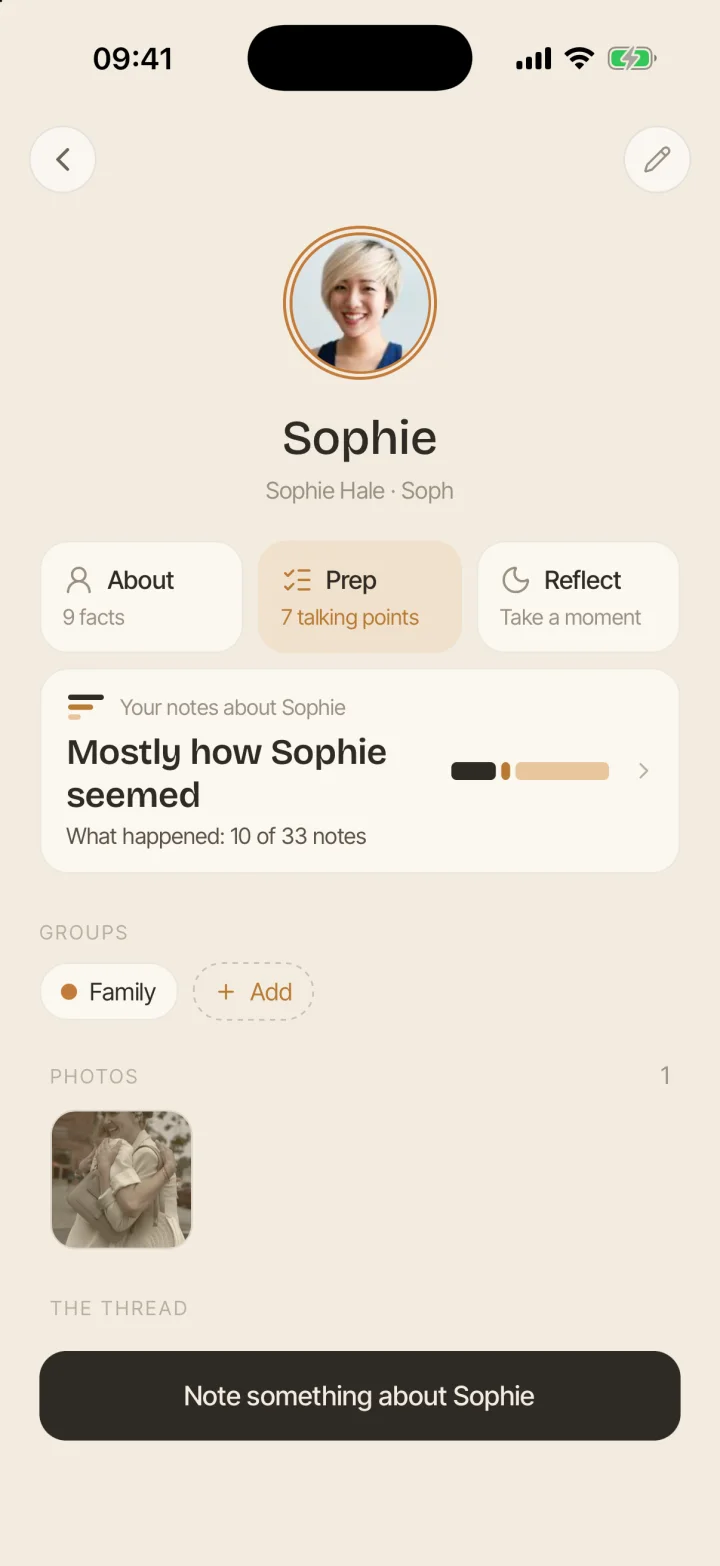
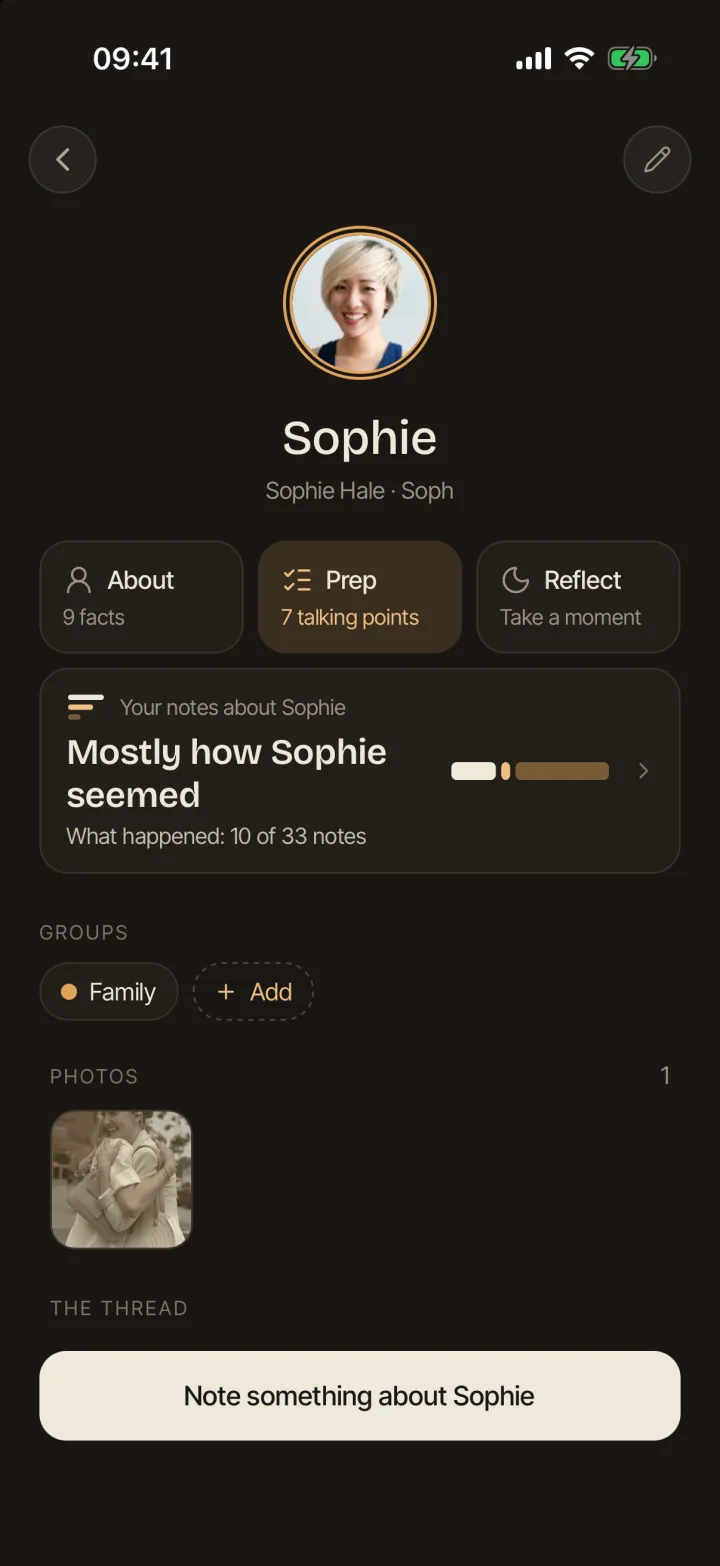
The unit is a person, not a day. Notes file themselves against whoever they were about, so a page is that person’s facts and their thread in date order.

Nothing to search. You open a name.

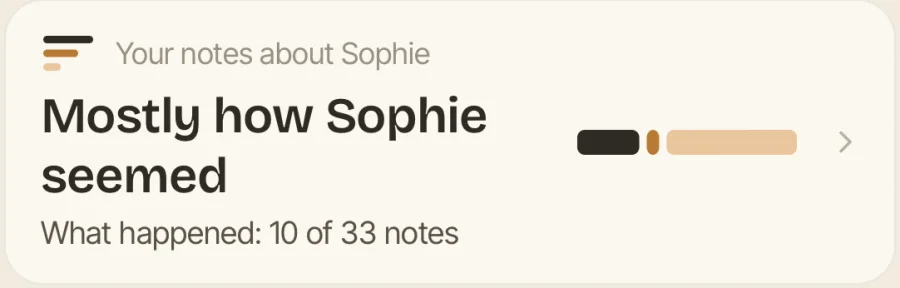
Sophie’s page: her photo, her name with “Soph” beneath it, a card reading “About Sophie — 3 facts”, then her thread of dated entries.

Voice transcription

Hold the mic and say what happened. What you said is kept word for word, and the notes it turned into sit underneath — editable, and re-runnable if the summary missed something.

The transcript stays, so you can always see what it heard.

A filed note: “What you said” holding the spoken sentence about walking up the reservoir, and below it the summary filed against Ana and against Hugo.

Nicknames

Say “Soph” and it files under Sophie. Kept matches the names you actually use out loud, so you never have to reach for anyone’s full name to be understood.

Matched, and shown to you as a match before anything saves.

The review screen: the transcript reads “Quick call with Soph this evening”, and the card below it has resolved to Sophie, with her photo and the label “matched”.

Multiple languages

Thirty languages in the picker, most with their regional variants, and an auto-detect option for anyone who switches mid-sentence. The app’s own interface is in seven.

Family words are fed to the recogniser per language, so “Schwiegermutter” and “mormor” come back spelled rather than guessed at.

The language picker, listing English and its regional variants and then Português (Portugal) and Português (Brasil), each with its name in English underneath.

Gentle resurfacing

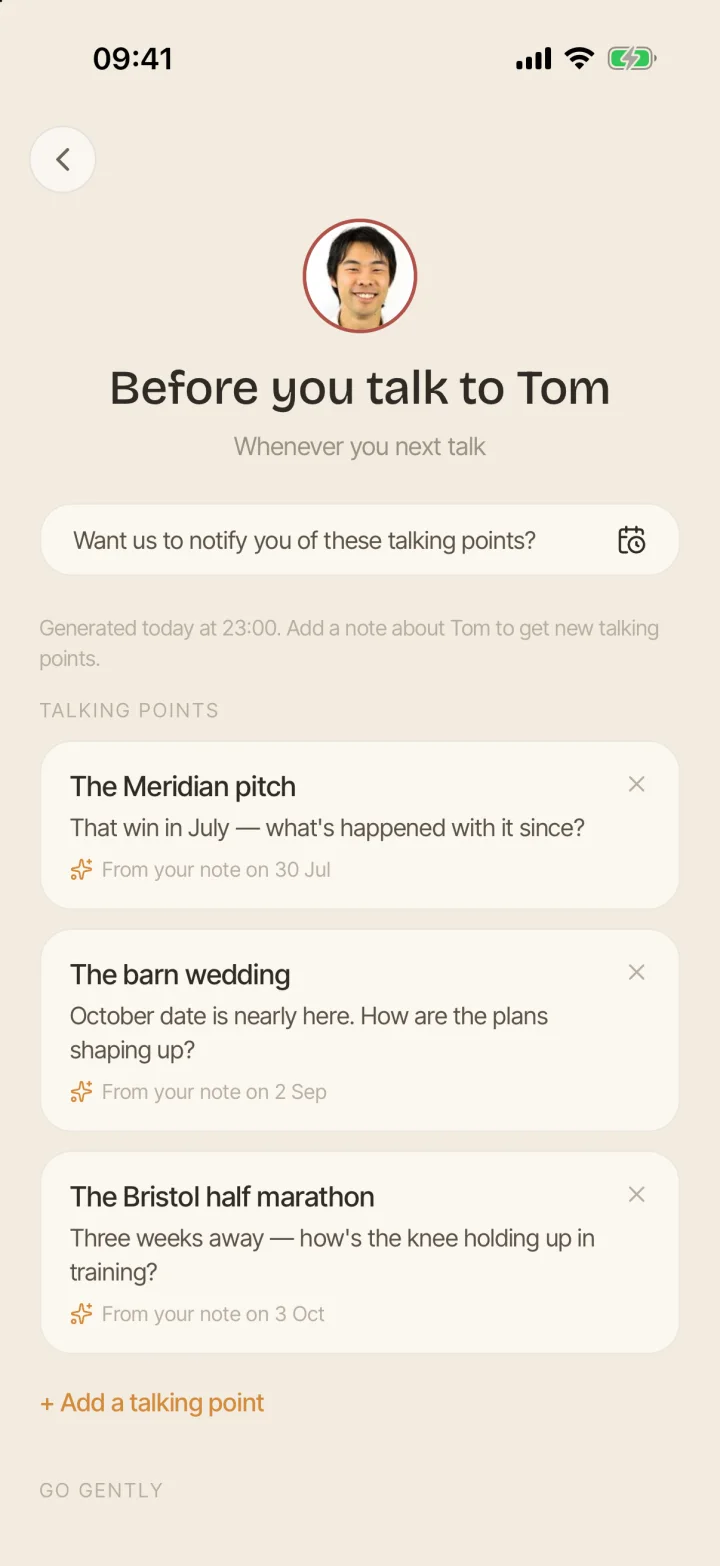
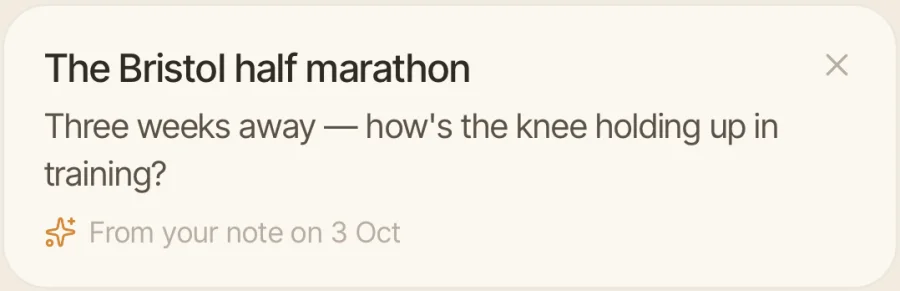
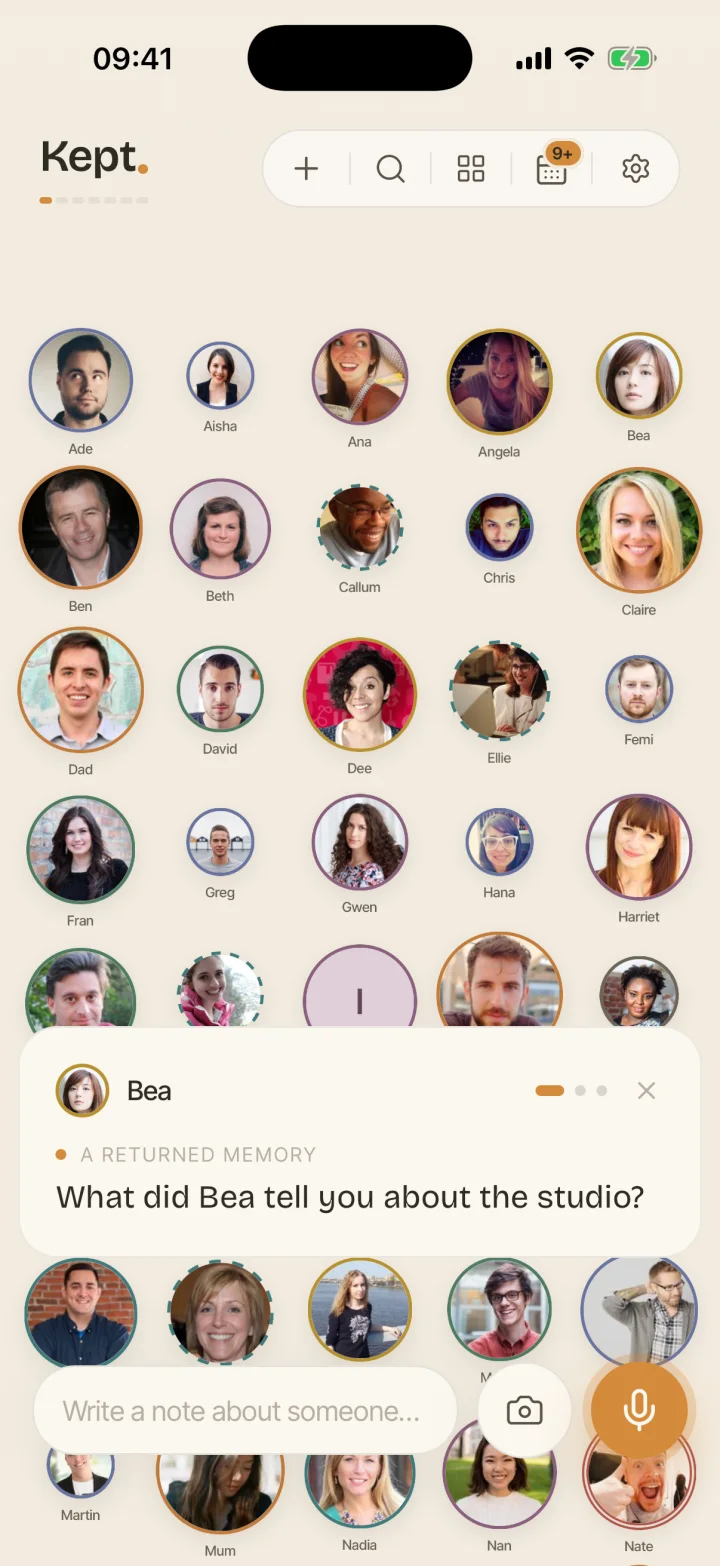
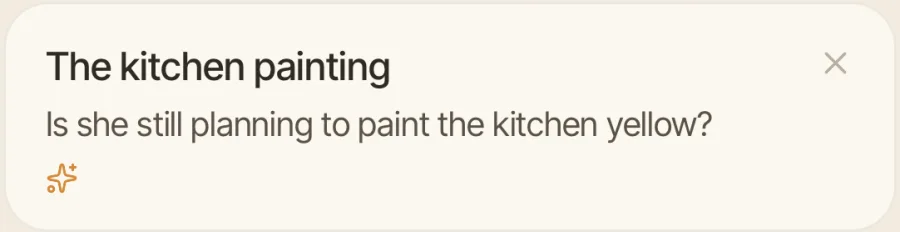
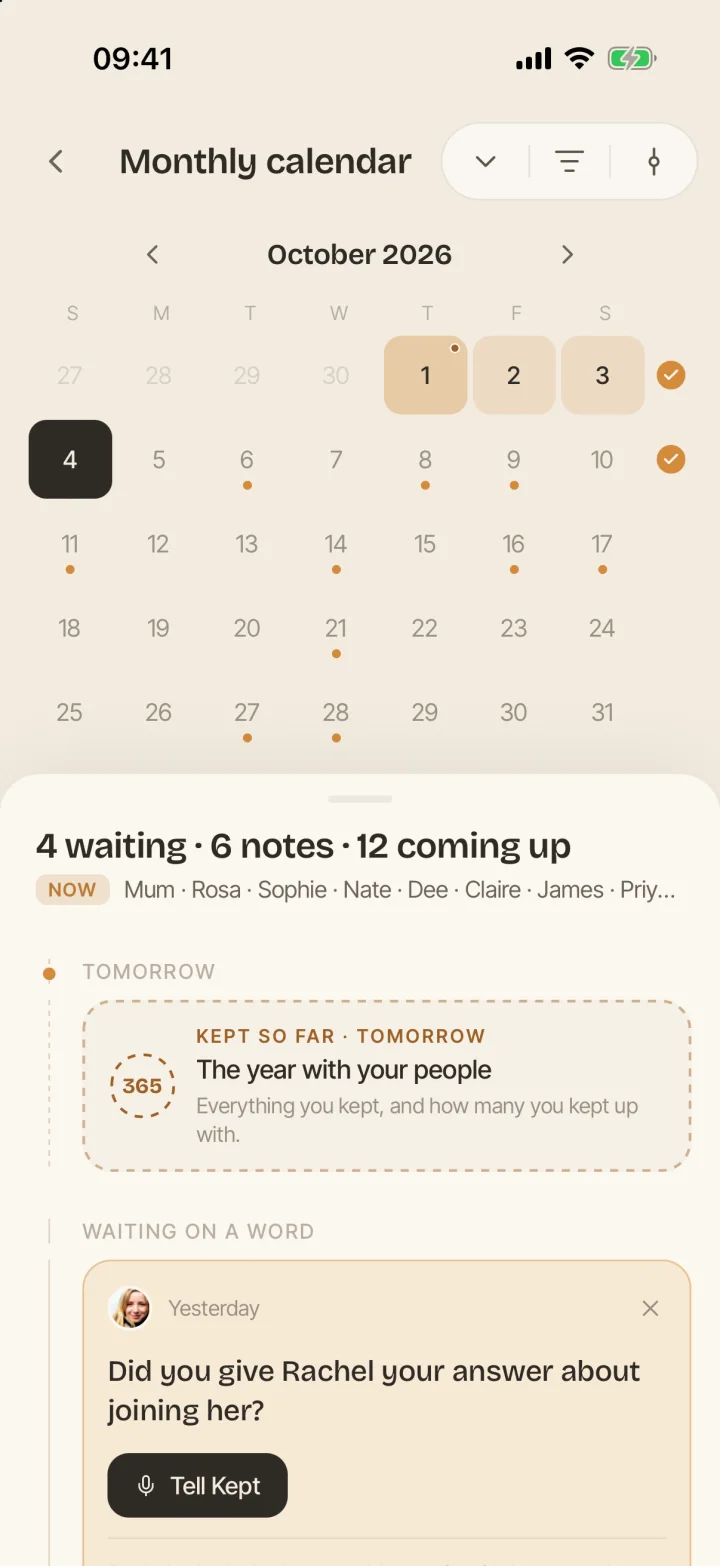
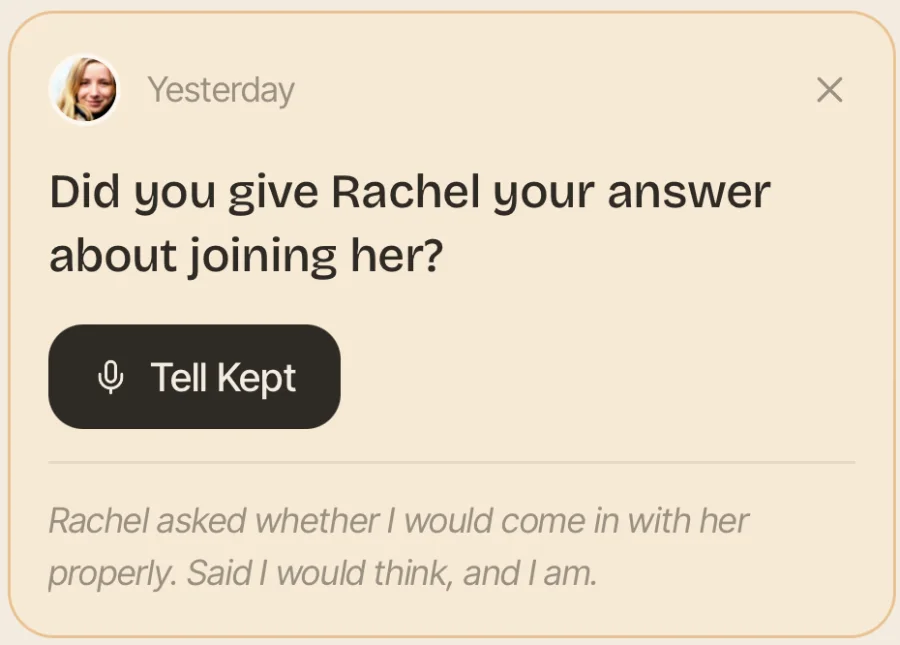
Stored details come back before a birthday or after a quiet stretch. A memory, never a red badge.

Anchored to a moment, carrying the actual detail.

Five frames of a returned memory — “Yesterday — Coffee with James before he starts looking properly” — fading out on its own to leave the constellation of faces behind it.
It leaves the same way it arrived. Nothing to dismiss, no badge left behind.

Also in there

  • Adding from contacts

    Pick someone from your phone instead of typing their name. On iOS the system picker needs no contacts permission at all — Kept only ever sees the one card you hand it.

  • Export

    One CSV holding every person, note, fact, nickname and place, sorted so each person’s history reads as a block. Written to disk before the share sheet opens, so it survives a cancelled hand-off.

What the evidence told us not to build.

Every one of these is a feature we could ship this month, and every one of them is ruled out by the same literature the rest of this page rests on.

  • No streaks.

    Measuring an activity makes people do more of it and enjoy it less — and in the experiments, they did less of it once the counter was taken away. A streak on your friendships would turn them into homework.

    Etkin (2016), Journal of Consumer Research
  • No relationship scores.

    Tracking inputs and balances is how exchange relationships work. Close relationships run on a different rule, and importing the ledger damages them. Kept holds needs and details — never who owes whom a message.

    Clark & Mills, communal versus exchange relationships
  • Kept never writes your message.

    Messages known to involve AI are judged less authentic, less trustworthy and less useful. The AI here faces inward only: it transcribes and organises what you said. The words that reach your friend are yours.

    Hancock, Naaman & Levy — AI-mediated communication
  • Nothing is ever listening.

    Around a fifth of people don’t realise their voice devices are always on, and privacy concern jumps once they find out. The mic in Kept opens when you press the button and closes when you let go. There is no other mode.

    Malkin et al. — privacy controls for always-listening devices

Go further in.

None of this needs the app. It is here because we had to work it out to build Kept, and it is more useful published than sitting in a document.

Someone reading, hands holding an open book.

Reading8 pieces

The questions people arrive with, answered from the research — leading with the answer rather than the preamble.

A hand writing a letter at a desk.

The research25 studies

Every study behind this site, with its method, its finding and what it doesn’t show — including the ones that cut against us.

Two coffee cups on a table between two people mid-conversation.

How it compares6 comparisons

Against personal CRMs, AI journals and a Notion template — each one saying plainly where the other product wins.

Start keeping the details.

Nine seconds of talking after you see someone. Kept does the filing, and the next time it matters, you’ll remember.

Free for 14 days, no card needed.